DS1820 LINUX DRIVER DOWNLOAD

| Uploader: | Kagalmaran |
| Date Added: | 16 November 2011 |
| File Size: | 10.10 Mb |
| Operating Systems: | Windows NT/2000/XP/2003/2003/7/8/10 MacOS 10/X |
| Downloads: | 26709 |
| Price: | Free* [*Free Regsitration Required] |

Compile the Linux Kernel from sources to know how to cross compile the Linux Kernel and d1820 to configure the drivers to enable inside it.
The 1-wire driver automatically scans every 10 seconds if new sensors are plugged on the 1-wire bus. Of course, electrically all sensors still are simply parallel on the same bus. It is also best to run as root to make sure there are no permission issues.
Digital Temperature Sensor Modules for Linux
Background Info Members of the WAFreeNeta community wireless networking group in Ds182 Australia, have installed PCs in various hot locations, including inside a house roof, and inside closed cabinets. Several solutions were available, but none of them really looked good.

Update, Another variant of the sensor, called DS18B20, has been confirmed to work with this circuit as intended. Note vs1820 the DS18S20 temperature sensors have "DS" written on them, but they are actually the DS18S20 - for some reason, Maxim haven't updated the details stamped on each sensor. Important Information for this Arm website This site uses cookies to store information on your computer.
Being able to have multiple temperature sensors interfacing to a single PC, with each temperature sensor on a length of wire, would provide a much more flexible alternative, allowing temperature sensors to be easily distributed, ie, one temperature sensor close to the PC motherboard, another outside the cabinet to monitor ambient temperature, etc.
To make digitemp remember the sensors you have to store the settings in a configuration file.
Monitor temperatures with Linux, Nagios, and DS1820
Graphing the output in Cacti To graph a single temperature in Cacti is quite simple. Four wires run to the 9-pin male D connector that will accept the serial line from the host computer.
If your computer connection cable libux shielding which is already grounded at the computer's side, do not connect it to earth ground at the array side as well. Temperature measurement with the Raspberry Pi and the 1-wire temperature sensor DS contains a list of different ways to drive a 1-wire bus from the Raspberry Pi.
The 1-wire connection can be realized with a space-saving angled female connector. The result d1s820 be checked using rrdtool lastupdate. For communication with multiple DS on a single 1-Wire bus.
Additionally, on-board temperature sensors are very limiting with regards to kinux can be monitored, as the temperature sensors are fixed, and designed to measure the temperature of a very specific part of the PC. With two-wire cable and another 6.
DS18xx sensors are relatively cheap, accurate and multiple limux can be connected to a single bus. An output redirection sends error messages into the file gettemp.

The DS18B20 digital thermometer provides 9-bit to bit Celsius temperature measurements. The script is stored in the executable file gettemp.
1-wire temperature sensor DS1820 at Raspberry Pi (GPIO directly)
A simple way to check which sensor you are measuring is de1820 hold it in llnux hand and probe the sensor indexes using the following command: The actual temperature is so anywhere from 6. At the beginning of the work with RRDtool is the definition of the database. You can do a walk ss1820 configuration using the following command:. In the main program are first the definitions of the paths to the temperature sensors - these of course you need to change!
Multiple DS18S20 temperature sensors can be connected in parallel, as they have unique bit addresses, and can be individually queried on a 1-wire bus. In the example above two DS18xx sensors are found. You can find additional Cacti documentation on this subject here.
Reading Temperature from a 1-Wire Sensor – Onion
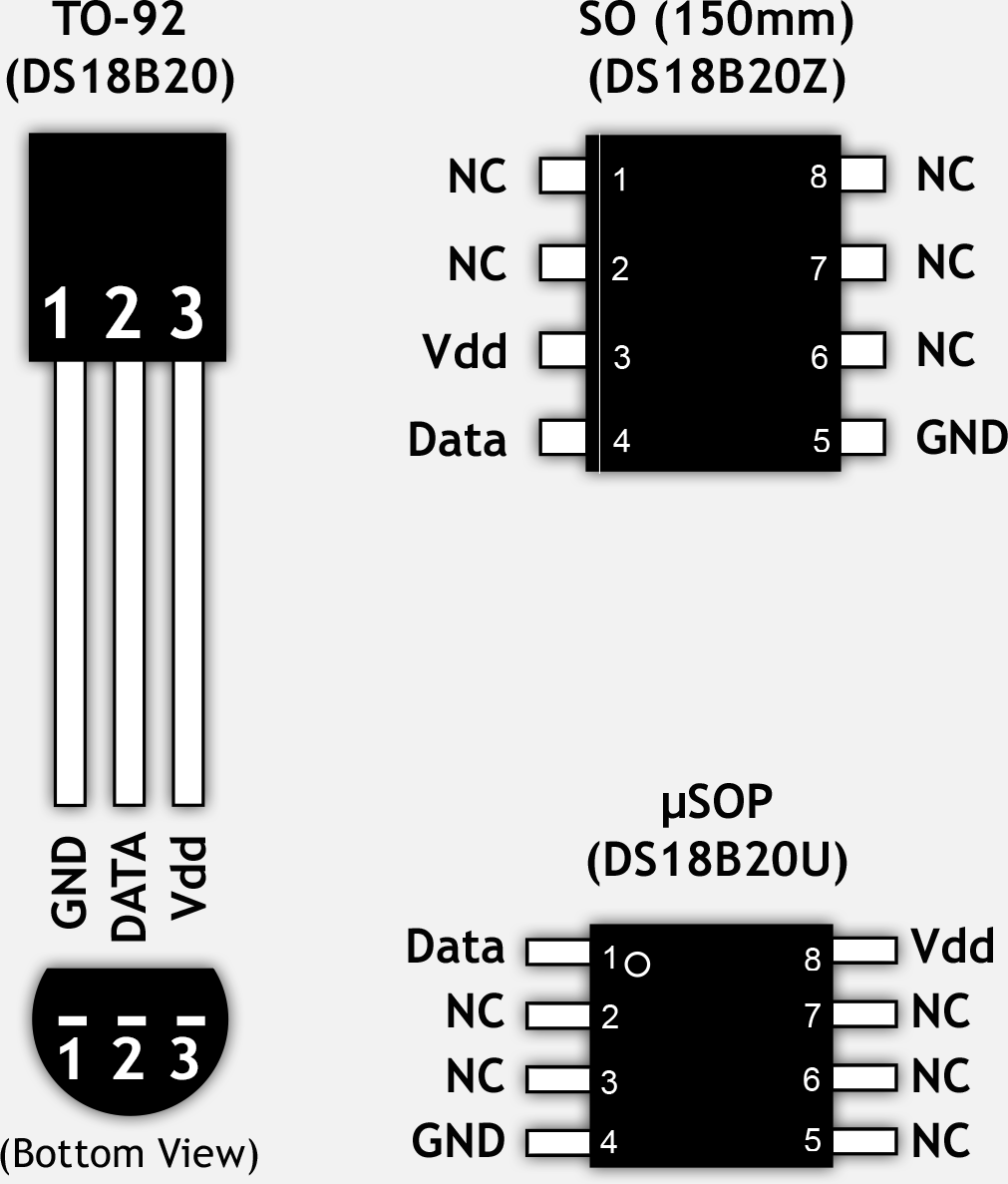
Many people including myself at one point in time printed out this sd1820 and glanced at this table when building the plug connections. By continuing to use our site, you consent to our cookies.
All devices you want are simply put in parallel on the two wires, which may run for several hundred meters.


Comments
Post a Comment